Understanding the 1000-gallon propane tank cost means looking beyond the tank’s purchase price. For homeowners, farms, rural estates, and small businesses across Texas and Oklahoma, the total investment may include delivery, site preparation, permits, piping, regulators, installation labor, and the first propane fill.
This guide explains expected 2026 costs, tank dimensions, installation requirements, usable capacity, and the differences between above-ground and underground options.
How Much Space Does a 1000 Gallon Propane Tank Need?
A typical 1,000-gallon propane tank measures approximately 15 to 16 feet in length and around 41 inches in diameter, although exact dimensions vary by manufacturer and model. That is longer than most vehicles, so placement next to a house needs real planning rather than a last-minute decision.
It is often suitable for large homes, rural estates, farms, off-grid properties, and small businesses running several propane appliances.
The table below shows the relative difference between common tank sizes:
| Tank Size | Approximate Usable Propane | Common Uses | Space Needed |
|---|---|---|---|
| 500 gallon | 400 gallons | Whole-home heating and several appliances | Moderate |
| 1,000 gallon | 800 gallons | Large homes, farms, generators, and multiple appliances | Substantial |
| 2,000 gallon | 1,600 gallons | High-demand farms and commercial properties | Extensive |
Buyers should also allow space for delivery-truck access, service clearance, piping routes, and safe tank placement.
McCraw’s guide to choosing the right tank size can help you compare common residential options.
Not the Same as a Grill Cylinder
It is worth making the distinction clear. The small portable cylinders you exchange at a store, shop for at hardware stores, or use for grills and RV appliances hold roughly 20 pounds of propane. Refilling or swapping one is a five-minute errand. A 1,000-gallon tank is a permanent installation designed to run an entire property, so it is delivered, sited, and filled by a licensed supplier rather than picked up and carried home.
Above-Ground vs. Underground: Which Installation Fits Your Property?
Above-ground tanks are generally cheaper to install because they require little excavation and remain easy to access for inspections, maintenance, and repairs. The tradeoff is visibility, so some homeowners use fencing or landscaping to help the tank blend into the property.
A 1000 gallon in ground propane tank offers a cleaner appearance but usually costs more. Excavation, backfilling, protective coatings, drainage conditions, and cathodic corrosion protection all add labor and materials to the project.
| Consideration | Above Ground | Underground |
|---|---|---|
| Upfront cost | Generally lower | Generally higher |
| Excavation | Minimal | Required |
| Maintenance access | Easier | More involved |
| Appearance | Visible | Mostly concealed |
| Corrosion protection | Exterior coating | Coating and cathodic protection |
Underground tanks also require protective coatings and anode bags, which help protect the steel from soil-related corrosion and reduce the risk of premature failure. Where groundwater is high, hold-down straps or ties may also be needed to anchor the tank. Because crews must excavate, backfill, and verify coating integrity, these steps all contribute to the higher installation cost.
How Much Propane Does a 1000 Gallon Tank Hold?
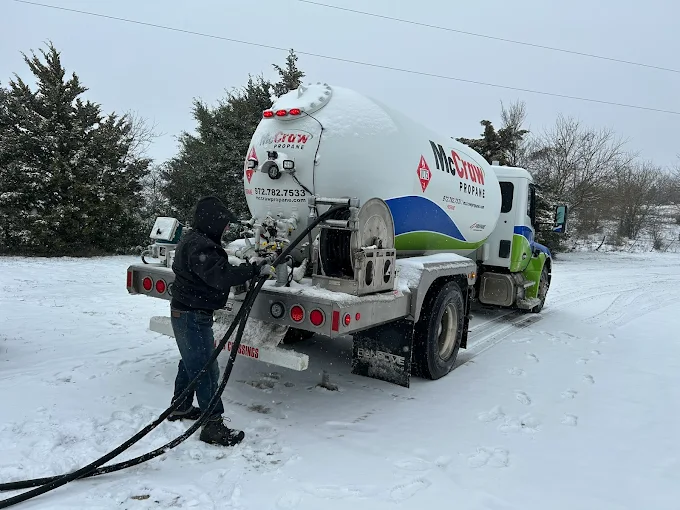
A 1,000-gallon tank normally holds about 800 gallons of propane when filled to the standard safe level. The remaining space allows liquid propane to expand as temperatures change. Propane Education & Research Council (PERC) notes that propane containers are generally filled to about 80% of their water capacity to allow for this expansion.
Useful calculation:
1,000-gallon water capacity × 80% = approximately 800 gallons of propane
Meaning a tank described as “full” has not received 1,000 liquid gallons. Its gauge reflects the safe operating fill level rather than the tank’s full water capacity.
1000 Gallon Propane Tank Installation Requirements
Professional installation begins with a site inspection, appliance-load review, and selection of a safe tank location. For an above-ground tank, the crew prepares a stable base, places the tank, connects regulators and gas lines, tests the system for leaks and pressure, and completes a final safety check before filling.
Underground installation also requires utility planning, excavation, approved tank support, coating inspection, corrosion protection, piping, careful backfilling, and final inspection.
Tank placement is not based on one universal setback. NFPA 58 requirements vary according to tank capacity, installation type, nearby buildings, openings, ignition sources, and property lines.
In Texas, the Railroad Commission regulates propane storage, installation, transportation, and use. Work should be completed by properly licensed professionals who can confirm all state and local requirements before installation begins.
Should You Buy or Lease a 1000 Gallon Propane Tank?
Buying a tank usually requires a larger upfront investment, but it eliminates ongoing rental fees and may give you more freedom to compare propane suppliers. Owners also have greater control over maintenance decisions, although repairs and installation costs remain their responsibility.
Leasing may lower the initial expense and simplify maintenance, but minimum-use requirements or supplier restrictions can apply, so read the fine print before signing. Buying can save money over many years, and an owned tank remains your asset if the property is ever listed for sale.
Before deciding, compare total long-term costs and review McCraw’s propane delivery options to see which arrangement best fits your household, farm, or business.

Frequently Asked Questions
How long will 800 gallons of propane last?
That depends on climate, square footage, insulation, appliance load, and daily usage. Homes using propane for primary heating will consume it faster.
Is a 1000-gallon tank too large for a home?
Not necessarily. It can be suitable for large homes, rural estates, off-grid properties, or households with high propane demand.
Can a 1000-gallon tank power multiple appliances?
Yes. It is well suited to powering furnaces, water heaters, dryers, fireplaces, generators, pool heaters, outdoor kitchens, and cooking appliances, and can meet high seasonal demand without frequent deliveries.
Can I install a propane tank myself?
No. A 1,000-gallon tank requires professional installation, testing, and compliance with applicable state and local requirements.
Should I buy or rent my propane tank?
Buying offers more control and avoids rental fees, while leasing can reduce upfront costs. The best option depends on your budget and supplier terms.
Does a stationary propane tank require recertification?
Inspection and maintenance requirements depend on the tank type, condition, applicable codes, and supplier policies. Stationary ASME tanks do not follow the same qualification schedule as portable DOT cylinders.
Get a Local Quote for a 1000 Gallon Propane Tank
Your final 1000-gallon propane tank cost depends on placement, installation, permits, piping, and fuel needs, so the only way to answer the question precisely is a site-specific quote. With those variables in mind, our company can walk you through the numbers so you learn exactly what your project involves.
McCraw Oil & Propane can assess your Texas or Oklahoma property and provide an itemized quote for an above-ground or 1000-gallon in-ground propane tank.